
Nerve Pain, Neuropathy & Concussion Recovery Support in Austin, TX
Non-invasive relief for tingling, numbness, and nerve pain.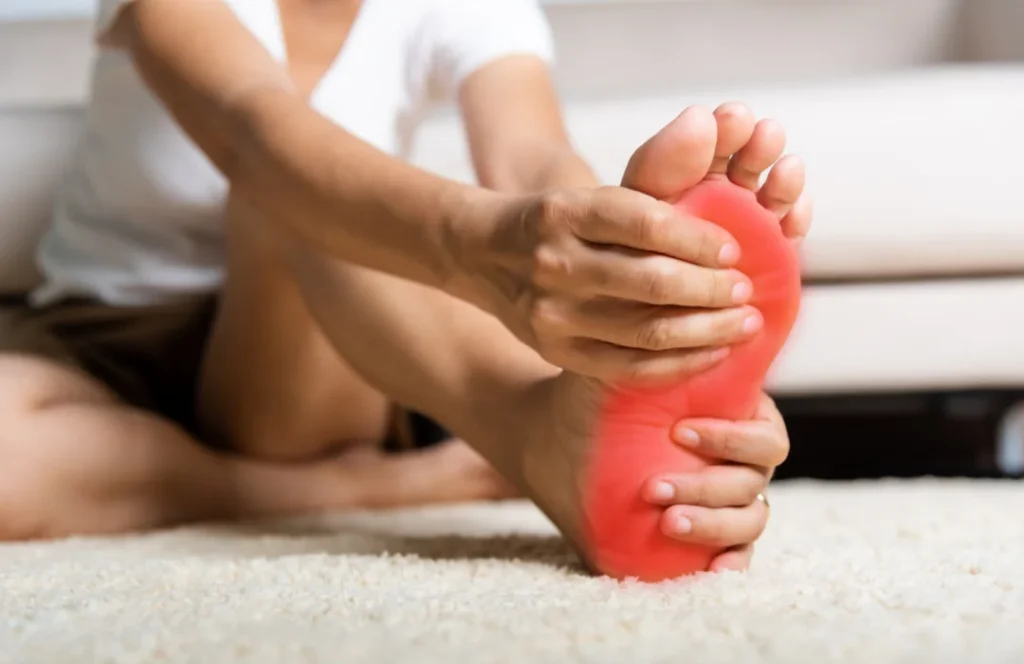
When the Pain Is a Nerve, Not Just a Muscle
Nerve pain doesn’t behave like other pain. A pulled muscle heals in a few weeks. A nerve that’s compressed, inflamed, or injured can keep firing false alarms for months — the hot, electric line down the leg from sciatica, the burning, tingling, or numbness of peripheral neuropathy, the fog and headaches that linger long after a concussion should have cleared.
Most people run the same playbook: anti-inflammatories, a round of physical therapy, maybe an injection, and a lot of waiting to see if it improves on its own. Those approaches all have their place — we’re not here to replace them. But there’s a non-invasive option that rarely comes up in that conversation: photobiomodulation (PBM), also known as red light therapy. It isn’t a spa add-on. It’s a growing area of clinical research aimed specifically at how nerves heal, and it’s something most people in Austin looking for relief have simply never been told about.
“Does Light Actually Reach a Nerve?”
Fair question — and the research on this has moved fast in the last few years. Long-wavelength red and near-infrared light penetrates far deeper into the body than most people assume. A 2025 study out of UCL’s Institute of Ophthalmology (Jeffery et al., Scientific Reports) measured near-infrared sunlight passing all the way through the human torso — even through clothing — and producing measurable effects on tissue on the other side. Those same wavelengths aren’t blocked by bone the way visible light is: near-infrared routinely passes through the skull, which is the same physical principle behind established clinical tools like near-infrared brain monitoring used in hospital neonatal units.
Delivery still matters, which is why we don’t rely on a panel a few feet away for nerve- or brain-focused work. Every inch of air between a light source and your skin is energy that never gets used. Our system uses direct, skin-to-pad contact instead — placed along the nerve’s path, over an area of neuropathy, or against the scalp for concussion-related work — so the light that research shows can reach deep tissue is actually landing where it’s aimed, at a clinically meaningful dose. It’s also why the published human research on nerve- and brain-targeted photobiomodulation almost universally uses direct-contact delivery — a helmet, a wand, a pad — rather than a panel.
There’s a second piece to this that matters just as much: dosing isn’t a “more is better” equation. Photobiomodulation research has repeatedly shown what’s called a biphasic dose response — a specific, effective range of light energy triggers the beneficial cellular effects, while too little does nothing and too much can work against you (Huang, Chen, Carroll & Hamblin, Dose Response, 2009). That’s the real reason a walk outside, a desk lamp, or a basic panel aren’t a substitute for a clinical protocol. It’s not just whether light can reach the tissue — it’s delivering the right amount of it, to the right place, and knowing where that window actually is.
How Photobiomodulation Supports Nerve Tissue and Recovery
Nerve cells are some of the most metabolically demanding cells in the body — they need a constant, high supply of energy just to keep signals firing correctly, and even more when they’re inflamed, compressed, or trying to repair themselves. Photobiomodulation works at exactly that level.
Red and near-infrared light is absorbed by cytochrome c oxidase, an enzyme complex inside the mitochondria of nerve and support cells. That absorption boosts ATP production — the cell’s basic energy currency — giving stressed or injured nerve tissue more of what it needs to reduce inflammation, support the surrounding blood supply, and carry out repair processes that a chronically under-fueled cell struggles to complete on its own.
This is also where phase-based sequencing comes in. Rather than delivering one flat dose of light for the full session, sessions move through distinct phases — shifting the light’s characteristics over time to match what the tissue needs at each stage, from reducing inflammation and improving local circulation early on, to supporting longer-term tissue remodeling later in the sequence. Inflamed nerve tissue and tissue further along in repair aren’t asking for the same thing, so the session doesn’t treat them the same way.
Nerve-specific research has focused on a few key mechanisms: reduced inflammatory signaling around compressed or irritated nerve roots, improved microcirculation to nerve tissue that chronically don’t have enough blood (a known factor in diabetic and chemotherapy-related neuropathy), and — for brain-directed work — measurable changes in white matter tissue integrity following head injury. This is the specific mechanism behind the clinical studies below.
What the Research Shows
Photobiomodulation for nerve and brain conditions is an active, growing area of clinical research. Here’s some of what’s been published:
Conditions We Support
Sciatica & lumbar radiculopathy
Nerve pain radiating from the lower back into the hip, leg, or foot
Pinched nerve & carpal tunnel syndrome
Nerve root irritation in the neck or back, and median nerve compression at the wrist
Peripheral neuropathy
Diabetic, chemotherapy-induced, and idiopathic neuropathy affecting the hands and feet
Chronic nerve pain & neuralgia
Nerve pain that has outlasted the original injury
Post-concussion syndrome & TBI recovery
Lingering headaches, brain fog, light sensitivity, and fatigue after a mild-to-moderate head injury
Post-surgical nerve pain
Supporting recovery after spinal or peripheral nerve decompression surgery
Not sure your symptoms fit neatly into one category? Most people’s don’t. Your protocol is built around what you’re actually experiencing, not a generic template.
Sessions & Pricing
Every nerve condition calls for a different depth of work, so session length is matched to what you’re treating rather than a one-size answer.
First-time client? A 40-minute intro session is $55 and covers two areas of the body. (First paid session only; can’t combine with other offers or discounts; doesn’t apply to mobile or pet sessions.)
Sessions are available in-studio and by mobile appointment across the Austin area. Packages can be shared between partners or family members, and shorter sessions can be stacked back-to-back into a longer combined session when that fits your protocol better.
FAQs about Photobiomodulation for Nerve Pain, Neuropathy, and Concussion Support
Getting the Most from Your Sessions

What to Expect
Sessions are quiet and low-key — no needles, relaxing environment, nothing to brace for. The pads are placed directly against the treatment area (the low back and leg for sciatica, the hands or feet for neuropathy, the scalp for concussion-related work), and most people feel a mild, comfortable warmth and little else.
Your session moves through several light phases over its 20, 40, or 60 minutes, each doing different work — this isn’t one flat setting held for the whole time. Beyond that, you’re just resting.
There’s no downtime. You can drive yourself home, go back to work, or head straight into a workout. Most people find it’s one of the more relaxing parts of their week, not just a treatment they have to get through.
Send Us a Message
Want to book an session? Have a question? Fill out the form below and we’ll get back to you ASAP!
Austin Red Light Therapy is appointment only. We schedule sessions out of Atomic Athlete gym in East Austin (3727 Drosset Dr, Austin, TX). We also offer mobile service and have partners around Austin, so let us know if Atomic Athlete doesn’t work for you.
Please contact us any time by phone, email, or text to ask questions or set up an appointment. You can also book appointments directly by clicking the Book Now button throughout the site.
Stay in Touch
Join our email list!
The staff at Austin Red Light Therapy are not licensed medical professionals. We do not diagnose, treat, cure, prescribe for, or prevent any illness or disease. Our services are not intended to replace medical care. We strongly encourage all clients to seek and continue care from licensed healthcare providers for any health concerns.